Land Preparation & Clearing
Before we can begin planting native deciduous trees, each site must be carefully prepared to give young trees the best chance of survival. This often means removing invasive, non-native vegetation that dominates the landscape and prevents natural forest regeneration.
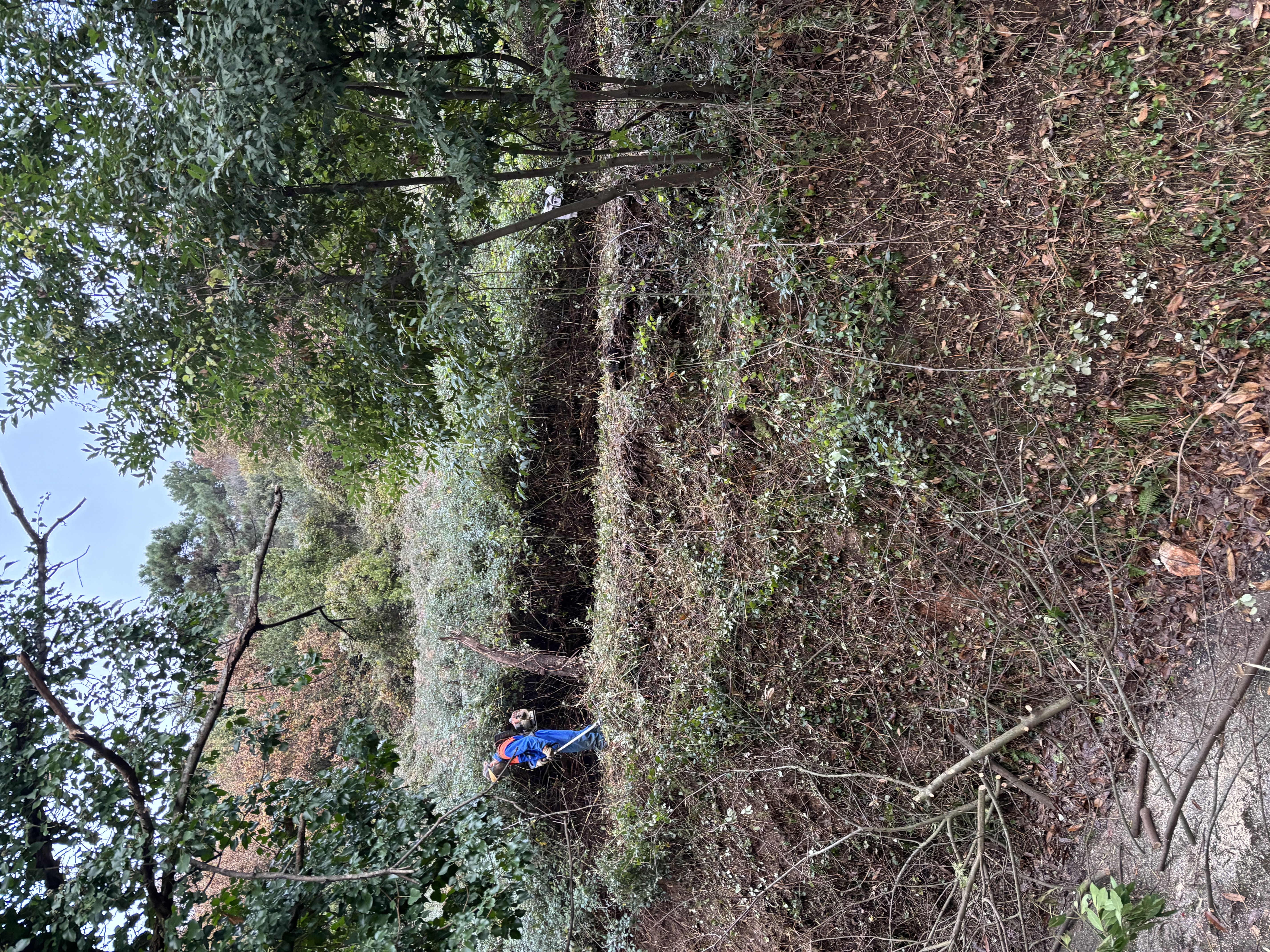
In most cases, land clearing is a slow and labor-intensive process. Our team, supported by hired local workers, uses weed wackers fitted with shredder blades to cut dense weeds, brambles, and thorny bushes into small pieces. Where the terrain allows, we also use forest mulching equipment to speed up the process. However, many of our sites are steep and uneven, making the use of machinery impossible.
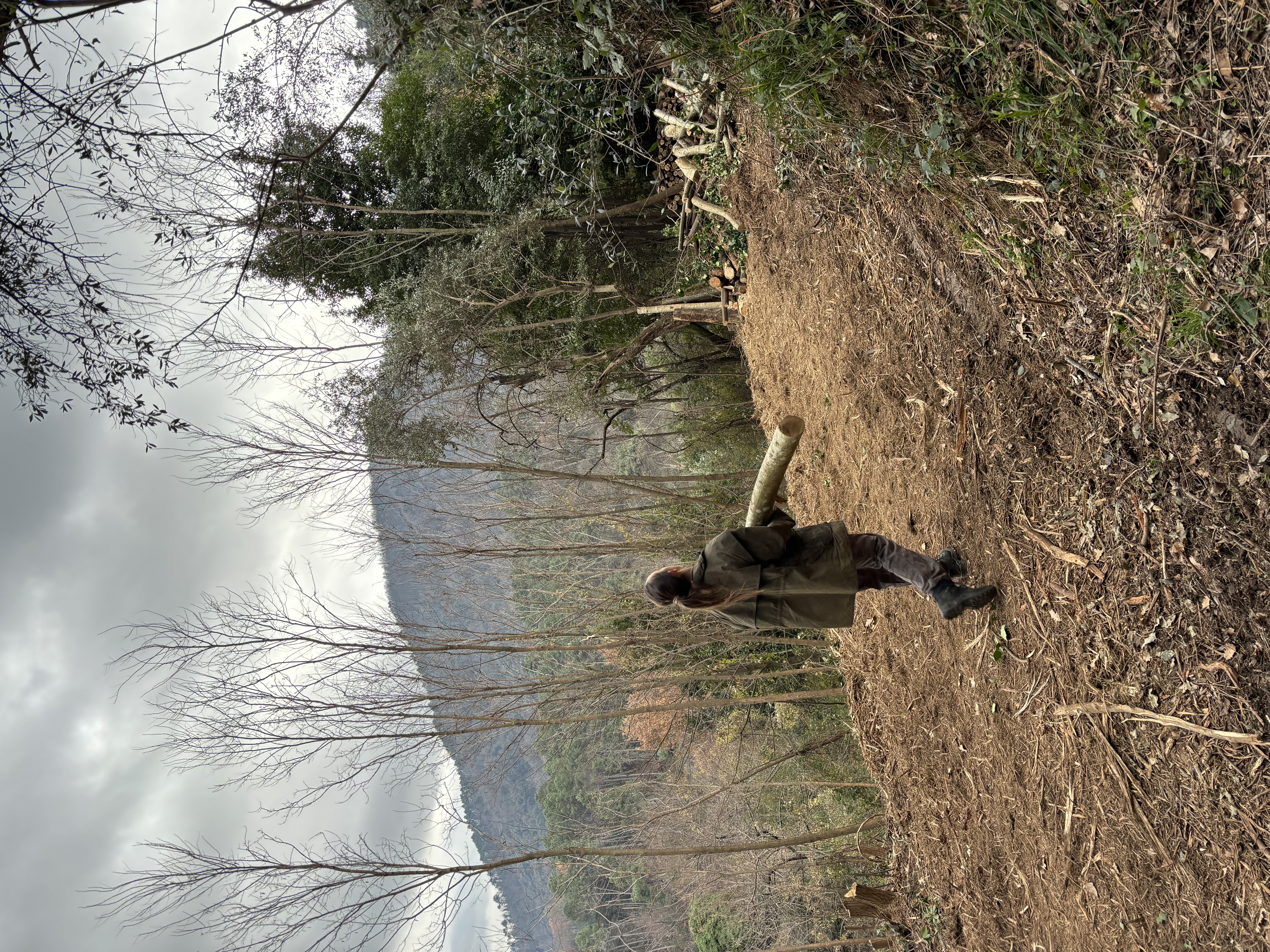
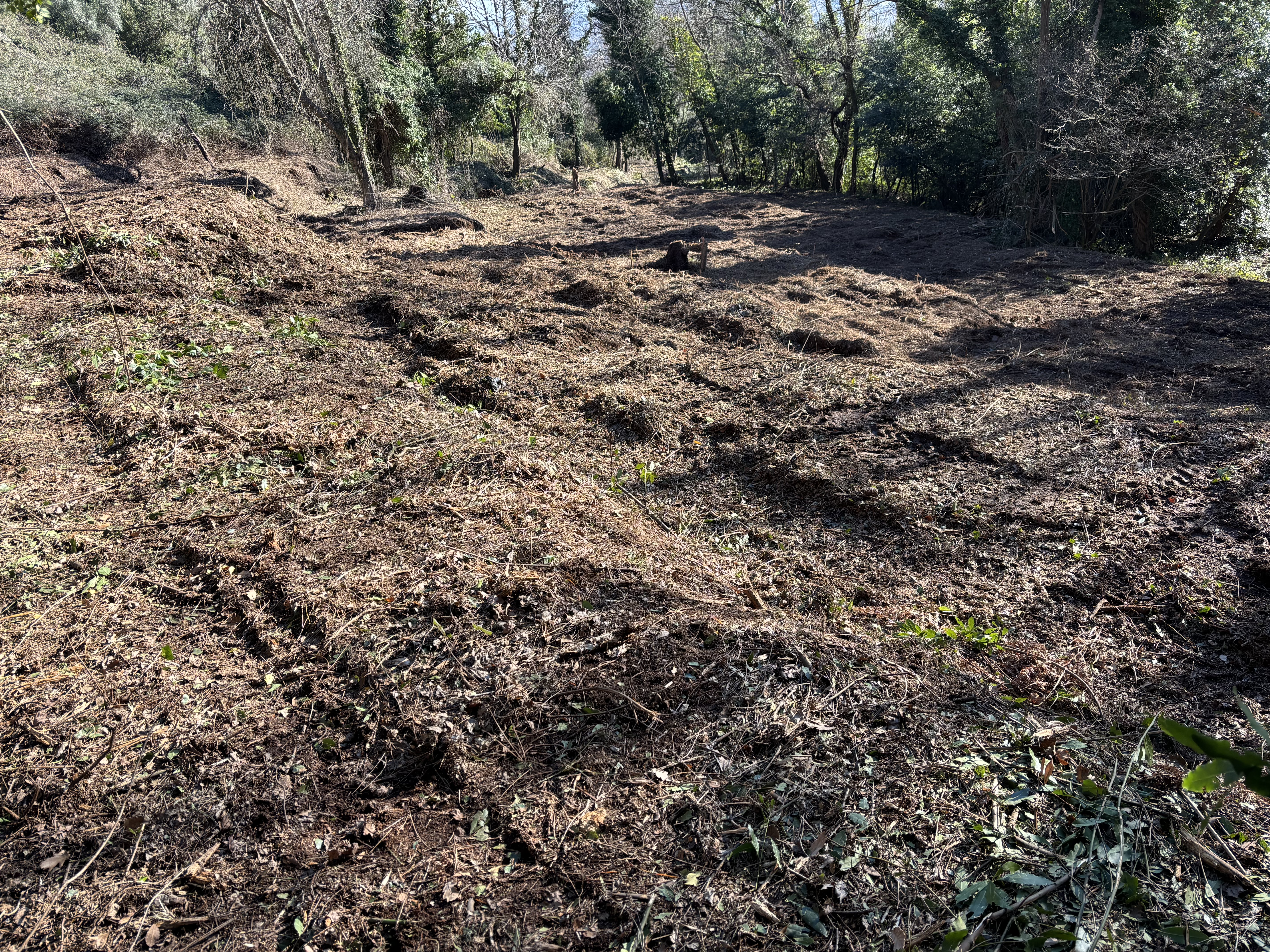
Rather than discarding the vegetation, we leave the shredded or mulched material on the ground. This helps suppress new weed growth, retains moisture in the soil, and reduces erosion, all of which support healthier tree development.
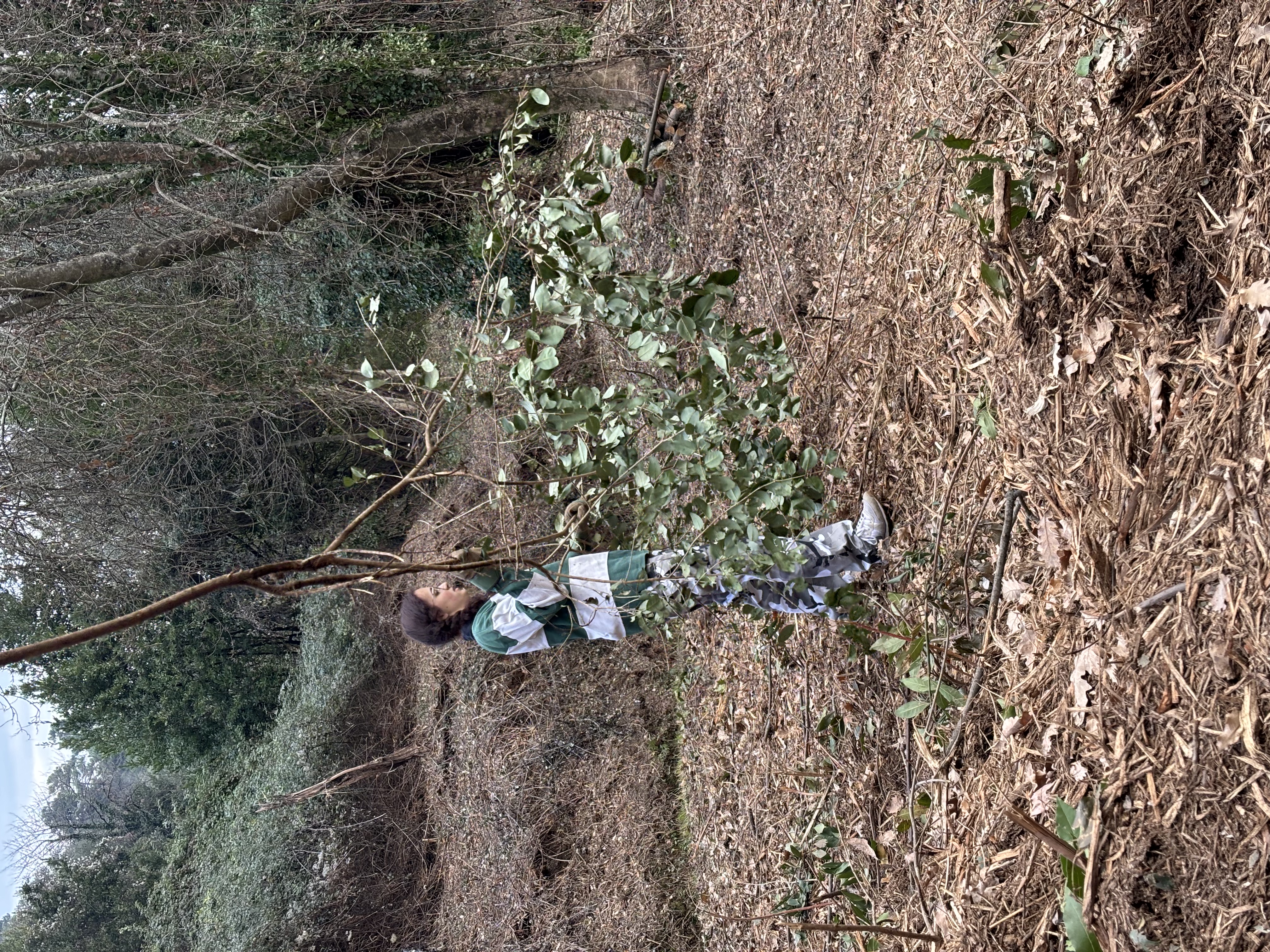
Bramble roots are often removed by hand to slow their regrowth. Invasive plants like ivy and thorny shrubs can grow up to ten times faster than young oak trees, quickly overtaking and suffocating them before they have a chance to establish. Even naturally fallen oak acorns that could become future trees are smothered by this aggressive undergrowth.
Clearing the land is therefore a critical first step. It is both labor and cost-intensive, but essential to restore a thriving forest ecosystem, one where native trees can flourish and biodiversity can return.